
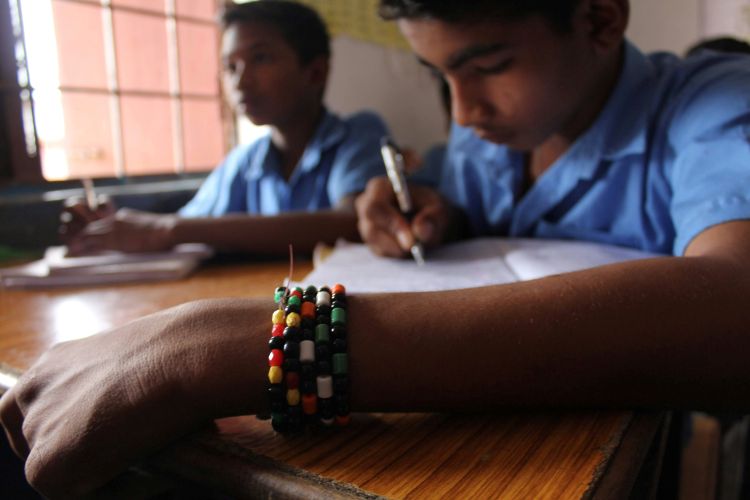
As part of SAMHIN’s mission to encourage open conversations about mental health in the South Asian community, we invited Yahya Usman, a high school junior with interest in mental health to share his perspective on academic pressure on the South Asian youth.
Academic success is deeply valued in many South Asian families. It’s viewed not only as a personal achievement but also as a reflection of family sacrifice and challenges. For many immigrant parents, education represents stability and better opportunities for their children.
While these values can motivate students to excel and pursue academic success, they can also create intense pressure. Many South Asian students see grades, test scores, and admission into prestigious universities as a measure of their self-worth. This pressure often leads to anxiety, perfectionism, and low self-esteem when results are not desirable. The chronic stress, coupled with reminders of sacrifices their parents made when immigrating to the United States, can make academic success feel like an obligation rather than a personal goal.
As a South Asian student, I can relate to much of the pressure South Asian students across the country face. A close friend of mine, whose family immigrated to the United States from India, reluctantly signs up for rigorous coursework at school and participates in competitive STEM tournaments every year despite having little interest in those activities.
His real talent lies in art. During a group project for a school English class, I was paired with him and asked him if he could complete the artistic portion of the project. Upon seeing his artwork and graphic design skills, I asked him why he didn’t pursue art when he was clearly uninterested in STEM.
He confided in me that his immigrant parents, who grew up in parts of India where opportunities were scarce and competition was cut-throat, kept pushing him to get perfect grades and become a doctor, seeing art as an unlikely option for his success.
My friend’s story is not unique: countless South Asian students across the country, each with their own circumstances and experiences, reflect the same effects of constant pressure to excel and achieve, with little regard for their feelings.
Over time, constant pressure to perform can lead to perfectionism, anxiety, and burnout. Students may hide their struggles because they fear being perceived as ungrateful or weak, leading to many struggles persisting long-term. Another factor is the stigma surrounding mental health in many South Asian communities. Mental health struggles may be dismissed as a lack of discipline or resilience, preventing many students from receiving support due to the fear of it poorly reflecting their family.
Academic achievement can be a powerful tool for growth and opportunity, but when success becomes tied to identity and family pressure, the pursuit of knowledge can become less exciting for students. Addressing academic anxiety in South Asian youth requires discussing issues regarding mental health, personal interests, and supportive environments where students feel valued beyond their academic performance. By encouraging balance between achievement and well-being, students can continue to pursue ambition that supports growth rather than undermines mental health.
By Yahya Usman
Yahya is a junior at Noor-Ul-Iman School and a dedicated SAMHIN volunteer.
Share your Thoughts
We invite your comments and share your experiences with minority pressure.
Subscribe to SAMHIN’s email list if you would like to be notified when SAMHIN publishes new blog posts.






Leave A Comment