
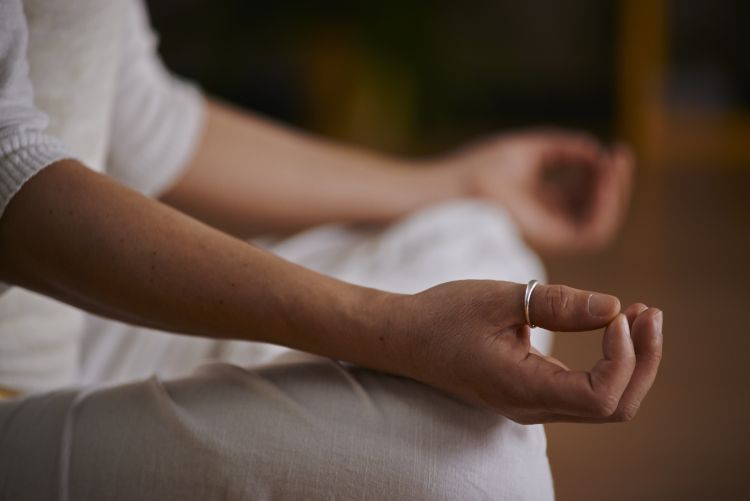
In alignment with SAMHIN’s mission to foster open dialogue around mental health within the South Asian community and spotlight the voices driving this important work we invited Ananya Dhoundiyal to share her reflections on why individuals have difficulty engaging in meditation.
In my therapy practice, I often hear South Asian clients express frustration with the generic advice to “just meditate.” While well intentioned, jumping straight into stillness can feel almost impossible when our mind is racing or our body wants to move and pace around. Traditional Ashtanga yoga gives us a roadmap which is not just about stretching and complicated postures. If we go back and dig deeper into the yoga philosophy, we’d realize it was a way of understanding how the nervous system works, mind behaves, body reacts, and how to bring them back into a state of balance.
The eight limbs of yoga follow a specific order. Ethical behavior (Yama), discipline (Niyama), postures (Asana), breath (Pranayama), and then moving inwards by withdrawing from external stimuli (Pratyahara), focused attention (Dharana), sustained meditation (Dhyana), and Samadhi (complete absorption/ oneness). We often try to meditate when we’re anxious or depressed, and many a time we feel like we “failed” or that it is not for us because the mind simply doesn’t sit still. But the older teachings never asked us to jump straight into meditation. They said: move first, breathe next, and only then should you work with the mind. And that adds up with what we see in therapy every day.
For Anxiety: Slow the System Down
Anxiety is like being stuck in an overactive loop with our hearts racing, breath becoming shallow, and thoughts being many miles ahead. If we try to meditate in this state, we might actually feel worse as we become hyper aware of that internal noise which can then lead to rumination instead of “meditation”. When someone is anxious, everything becomes fast. There’s a lot of movement. We find people pacing, the breath moving faster, heart rate elevating, and thoughts racing. The body is already in motion. There is excessive energy.
Naturally, the work is to slow things down. Start with slowing the pace of movement; slow walking; or practicing asanas that let you slow down, stretch, and feel grounded. Pranayama that lets you deliberately slow the breath in safety with control. When the body slows, the breath follows and the thoughts eventually stop racing. Only once the heart rate starts to drop and “fight or flight” response cools off, we can let the mind settle. Meditation, now, is about noticing the thought, being aware of the awareness
instead of ruminating.
As yoga philosophy says, the goal of yoga is “chitta vritti nirodah” or “cessation of the fluctuations of the mind,” but we have to earn that quiet through slow movement, slow breath and ultimately a relaxed mind.
For Depression: Get Moving
Depression is the opposite of anxiety. Everything slows down too much for our own good. People feel heavy, stuck, and checked out. That’s the body’s way of shutting down because the threat feels like a lot to handle. People lie in bed because even sitting up feels like a lot. Sitting in a dark room trying to meditate can sometimes deepen that sense of withdrawal and shutdown.
What helps is movement or “activation”. It can be dynamic physical movement with faster asana / vinayasa flow or movement of breath with energizing pranayama that can stir up the life force or “prana”. Both modern neuroscience and Cognitive Behavioral Therapy (CBT) agree that physical action creates momentum. Once the breath moves faster, the heart follows, and the nervous system wakes up, shifting thought and lifting the mind and we feel less “stuck”.
Yoga practitioners must have understood nervous system regulation. They even described concentration in different stages. They said Dharana, which is the first stage of focus, is simply holding your attention on one thing for a short moment. Some traditional commentaries describe it as about twelve seconds. If you can keep that going longer, it becomes dhyana or meditation (12*12 seconds). If it deepens even more, it becomes stillness (Samadhi), which is 12*12*12 seconds). It’s not mystical. It’s not a one-time fix. It’s consistent practice.
The Bottom Line
Meditation is a skill, not a quick fix. In the Ashtanga system, it is considered an advanced practice that requires a regulated nervous system as a foundation. For many of us, we were given the “destination” (peace of mind) without being shown the “roadmap” (the physical and breath work).
CBT says something similar in a different language. Notice the thought but don’t run with it. Don’t believe every story the mind tells. Yoga says the mind will jump, but you don’t have to jump with it. Both approaches teach the same skill: thoughts are not facts, and the mind can be trained.
For South Asians, this blend of yoga philosophy and modern therapy feels familiar because it respects the body, breath, and mind. And it reminds us that healing doesn’t start with forcing the mind to be quiet. It starts with meeting the body where it is. Whether that means slowing down or waking up and then gently guiding the mind back home.
 By Ananya Dhoundiyal, LMSW
Ananya a psychotherapist in private practice in Virginia and dedicated SAMHIN volunteer.
Share your Thoughts
We invite you to share your thoughts, experiences, or reflections or post a question for the author in the comments.
Subscribe to SAMHIN’s email list if you would like to be notified when SAMHIN publishes new blog posts.
Feature image by EnergieDeVie from Pixabay









I totally relate to this! I’ve tried meditating so many times, but I usually get frustrated because my mind won’t stop racing and end up deciding it’s just not for me. As someone who’s loved yoga for years, I found this perspective really validating. I also really liked how you connected traditional yoga philosophy with neuroscience and CBT. I think a lot of people dismiss practices like yoga and meditation as being “woo-woo,” but understanding why they work—and how they influence the nervous system—makes them feel so much more approachable and evidence-based.
I’m really glad it resonated with you. I’ve had a similar experience. Mindful walking or simple breath linked movement or art can be a nice bridge. Hope you continue your journey. 😊