
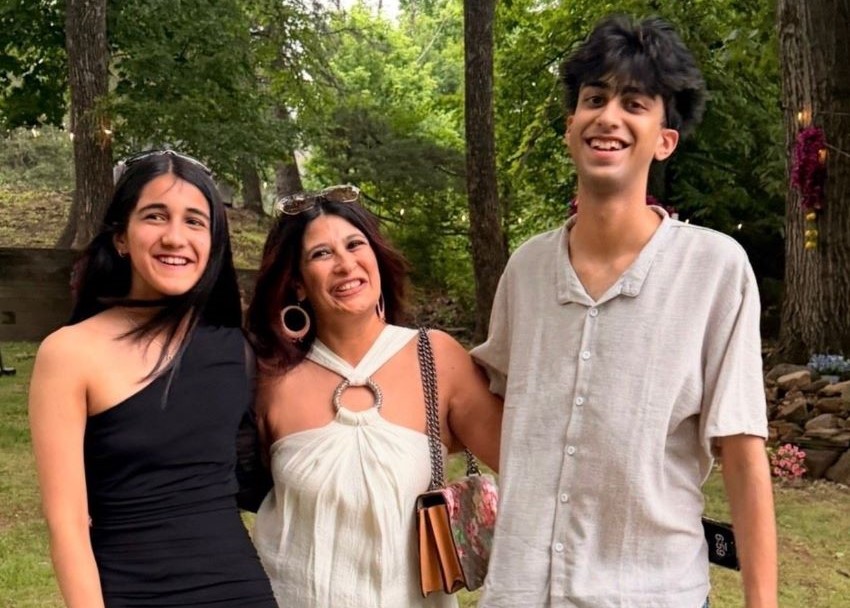
September is Suicide Prevention Awareness Month. As part of SAMHIN’s mission to encourage open conversations about mental health in the South Asian community, we invited Shikha Sadhar, who lost her husband to suicide, to share her and her family’s journey of grief.
This year marks a decade since my husband’s passing, a moment that dramatically changed my life. I’ve come to realize that grief cannot be escaped, that it’s perfectly okay to not be okay, and the importance of surrounding myself with those who understand.
However, the most profound lesson I’ve learned over these ten years is this: grief and happiness can exist together, and they are not dependent on each other. In the early years, this duality was confusing. Experiencing a joyful moment while feeling equal parts sadness felt like emotional whiplash. Grief is still with me today because the man I dedicated my life to is gone. Yet, my relationship with grief has transformed. I carry it like a backpack, and I’ve grown strong enough that I often don’t even notice it’s there.
I’ve given myself permission to seek my own version of happiness, to embrace joy again, and to fully engage in this life I have. I’ve learned not to associate my joy with any implications about my late husband or our love. Grief and happiness coexist, but they are unrelated. My longing for my husband doesn’t diminish my ability to appreciate the joy in my life, just as finding joy doesn’t mean I am disrespecting his memory.
Although for the kids, things have changed from The Early Days vs. Today. Then: the focus was on survival. Each day revolved around getting through meals, bedtimes, and tears. Every first occasion felt heavy, and each holiday served as a reminder of the empty chair.
Now: life has a steadier rhythm. The kids have their own routines, school events, and friendships. Grief is no longer a tidal wave crashing over me daily; it’s a quiet current flowing beneath the surface.
The most challenging aspect of these ten years has been witnessing the milestones he has missed. He isn’t here to see their first days of middle school, high school, college, or driving lessons. Yet, I see his spirit in them every day.
A decade is a long time, and grieving children grow into adults, each processing loss in their own unique way. It’s completely normal for my kids not to want to commemorate their father’s death anniversary in the manner we used to, or I might expect them to. As they transition into teenagers and adults, they are moving away from formal memorials. They rather carry his memory quietly in their daily lives rather than designating a specific day for sadness or ritual.
As they mature, their understanding of who their father was, evolves, and their grief shifts from an acute longing to a gentle, underlying absence. Desire for normalcy: they may wish to focus on their present lives, school, work, and future without being drawn back into a heavy emotional space.
A decade later, I realize the deep wisdom of the following proverb.The birds of sorrow still fly over, and they always will. But they no longer hover above us. My focus has shifted from simply weathering the storm to tending the garden that has grown in its wake. Watching our children grow and seeing their father’s spirit in their laughter and their kindness is my greatest joy. Their father’s love shines through their smiles and compassion. My children are his lasting legacy, and my heart overflows with love for each of them, as well as for him. Our family’s story is no longer centered solely around loss; it is about the powerful and wonderful growth of a new, strong family.
 By Shikha Sadhar
Facilitator for SAMHIN’s Janani Suicide Loss Survivor Support Group
Share your Thoughts
If you have been touched by suicide, I would love to hear about your experience of the loss.
Subscribe to SAMHIN’s email list if you would like to be notified when SAMHIN publishes new blog posts.









Leave A Comment