
As part of SAMHIN’s mission to encourage open conversations about mental health and the challenges of dual cultural identities of second generation South Asians, we invited a passionate advocate for mental health awareness, Suhana Shankar again. She shares her experience of transformative change when exposed to other South Asians in college. See Suhana’s first post: The Cost of Fitting In: Part One.
When I left for college, I didn’t expect my relationship with my identity to change. If anything, I thought I had already figured out how to navigate being Indian: keep the parts that felt private to myself, blend in, and don’t draw attention to it.
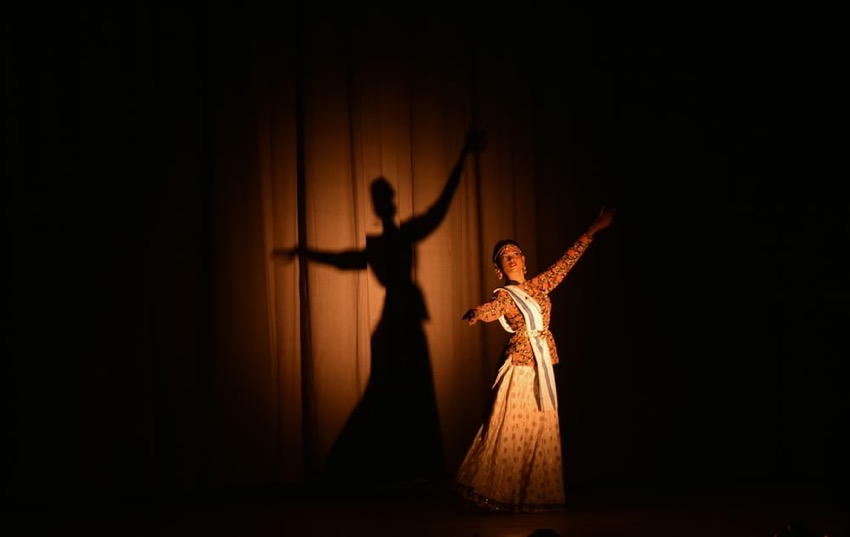
Then, randomly, I decided to audition for my school’s Bollywood dance team.
At the time, it didn’t feel like a life-changing decision. I had always loved dancing, and I thought it would be a fun way to meet people. Instead, it became the community that completely reshaped the way I saw my culture and myself.
For the first time, I was surrounded by South Asians whose relationships with their identities looked completely different from mine. Some had grown up in India, while others, like me, were born and raised in the United States. Some had spent their childhoods in places like Singapore, Hong Kong, or Indonesia. Despite our different backgrounds, there was a shared understanding that I had never experienced before. I didn’t have to explain why my family did certain things, why my parents had particular expectations, or why certain songs and movies carried so much nostalgia. People just understood.
More importantly, I met South Asians who were unapologetically proud of who they were.
Our team presidents became role models and friends for me. They embraced their culture with a confidence I had never seen growing up. Through them, and through my teammates, I started reconnecting with parts of my identity that I had quietly pushed aside. I rediscovered the Bollywood movies I had watched as a kid, fell in love with Indian music, and began learning more about my culture instead of trying to distance myself from it.
Slowly, the changes extended beyond dance.
I started introducing myself with my full last name instead of shortening it. I began telling people my middle name is Saraswati – a name I once kept to myself but now love because it connects me to my grandmother and my family. I found myself wearing jhumkas, payaal, and kurta tops with jeans simply because they made me happy. My dorm room gradually filled with Bollywood posters that celebrated a culture I had once tried to hide.
Perhaps the biggest change wasn’t external at all.
For years, I believed that being visibly Indian would make me stand out in the wrong ways. Now, I want people to know I am Indian. I find myself standing at the club fair enthusiastically telling anyone who walks by how much fun Bollywood dance was. Every year, I perform in front of hundreds of students during wearing a hot pink lehenga, something my high school self could never have imagined doing.
What surprised me even more was seeing my non-South Asian friends embrace the celebration alongside us. They come to all our performances, throw color at Holi, learn Bollywood choreography, and celebrate our traditions with genuine excitement. Being Indian no longer felt like something that separated me from other people. Instead, it became something I was excited to share.
My relationship with my family changed too. Suddenly, I had new Bollywood movies to discuss with my relatives, songs to recommend, and performances to show them. Watching my family beam with pride as they saw me embracing a culture they had always hoped I would love is something I’ll never forget.
Looking back, it’s remarkable that joining one student organization could change so much. But it wasn’t really about dance. It was about finding a community where I felt seen. It was about meeting people who showed me that there wasn’t one “right” way to be South Asian. Most of all, it was about realizing that the parts of myself I had once tried to hide were never the problem.
Community didn’t just make me prouder of being Indian. It gave me permission to be fully myself. And sometimes, that’s exactly what we need to begin healing.
 By Sahana Shankar
Undergraduate student studying psychology, aspiring to pursue a mental health career, and a dedicated SAMHIN volunteer
Share your Thoughts
We invite you to share your thoughts, experiences, or reflections in the comments – your voice can help open the door for others.
Subscribe to SAMHIN’s email list if you would like to be notified when SAMHIN publishes new blog posts.





Leave A Comment